Hair Extension Removal in Houston: What to Expect
Professional hair extension removal is an important part of the extension wear cycle. It is not simply a matter of taking the extension hair out. Each attachment needs to be released appropriately, the natural hair should be carefully detangled, and both the natural hair and extension hair should be assessed before the next step is decided.
For Ice Fusion wearers, removal may be followed by a reinstall, an adjusted extension plan, or time without extensions depending on the condition of the natural hair, scalp comfort, extension hair, and the client’s goals.
Bloom Studio Hair Extensions specializes in Ice Fusion Hair Extensions in Houston, a cold fusion, strand-by-strand method installed with a specialized cold adhesive or gel without heat.
If your extensions were installed by another provider or you are unsure which extension method you are currently wearing, contact the studio before booking. Bonds, tapes, beads, rows, and other extension systems require different removal approaches.
What Happens During Professional Hair Extension Removal?
Professional hair extension removal begins by identifying the extension method and evaluating the current condition of the attachments and surrounding natural hair.
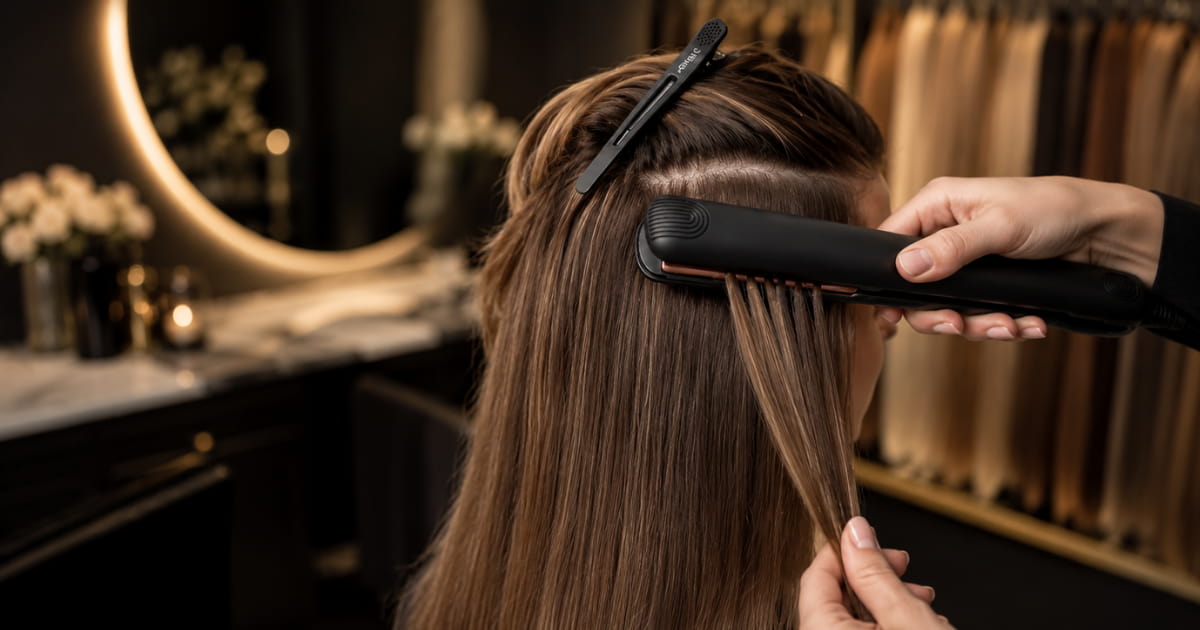
The stylist then works through the hair in controlled sections, releasing each attachment using the process appropriate to the installed system. Once the extension hair has been removed, trapped shed strands, tangling, and product residue can be addressed before the natural hair is assessed.
A professional removal appointment may include:
- Confirming the extension method and discussing any discomfort, tangling, matting, or concerns.
- Sectioning the hair so each attachment can be handled individually.
- Releasing each bond using products and tools appropriate to the installed system.
- Separating the extension strand from the natural hair without forcing resistant attachments.
- Carefully detangling naturally shed hair and buildup around the attachment area.
- Assessing the condition of the natural hair, scalp, and extension hair.
- Determining whether a reinstall, adjusted extension plan, or another next step is appropriate.
The exact appointment may vary depending on the extension method, condition of the hair, amount of tangling or buildup, and whether removal is being completed as part of a planned professional Ice Fusion reinstall in Houston.
Significant matting, heavy buildup, or an installation completed elsewhere may require additional assessment before the appropriate service can be confirmed.
How Is Ice Fusion Hair Extension Removal Different?
Ice Fusion Hair Extensions are installed strand by strand using a specialized cold fusion adhesive or gel without heat.
Because the method consists of many small individual bonds, removal requires detailed sectioning and attention to each attachment rather than releasing a wide tape panel, opening a bead, or removing an entire sewn row.
The removal process should be appropriate for the bonding system that was used during installation. Each attachment should be properly released before the extension strand is separated from the natural hair.
If a bond is resistant, it should be reassessed rather than forcefully pulled, twisted, or cut from the hair.
This is one reason professional, method-specific removal is important.
When Should Hair Extensions Be Removed?
Hair extensions should generally be removed or reinstalled at the appropriate point in their wear cycle rather than being left in indefinitely.
The timing varies between clients and depends on factors including:
- natural hair growth;
- natural hair density and condition;
- bond condition;
- tangling around the root area;
- home care;
- lifestyle;
- and how the extensions have grown out.
Removal or professional assessment may be appropriate sooner if attachments begin joining together, significant root tangling or matting develops, or the client experiences persistent pulling or discomfort.
Some clients may also choose removal because they want to change their extension plan or spend time without extensions.
Our guide to how often hair extensions need to be moved up or reinstalled explains extension maintenance timing in more detail.
If you are experiencing significant discomfort or matting, it is better to have the extensions assessed rather than waiting for a preset maintenance date.
Why Is Professional Hair Extension Removal Important?
The correct removal process depends on the extension system being worn.
Attempting to remove extensions at home by pulling, twisting, cutting close to the roots, or applying an unsuitable product may place unnecessary stress on the natural hair and can make existing tangling more difficult to manage.
Ice Fusion is a cold-applied, strand-by-strand bonding method. It should not automatically be treated in the same way as a hot-fusion K-tip, tape-in extension, micro bead, or sewn row.
During professional removal, the goal is to release each attachment in a controlled way while minimizing unnecessary pulling on the natural hair.
However, no professional removal service can guarantee that every client will experience zero breakage or zero hair changes. The condition of the natural hair after removal can also be affected by the original installation, extension weight, maintenance timing, tangling or matting, home care, and the condition of the hair before the extensions were installed.
When professionally installed, maintained, and removed correctly, Ice Fusion is designed to be gentle on natural hair.
If an attachment feels loose, uncomfortable, or surrounded by significant tangling, avoid trying to force it out at home. Contact Bloom Studio Hair Extensions so the appropriate next step can be assessed.
How Should You Prepare for a Hair Extension Removal Appointment?
Before your appointment, let the studio know which extension method you are wearing and approximately when it was installed.
It is also helpful to mention whether:
- another provider completed the installation;
- you are experiencing matting or significant tangling;
- any attachments feel uncomfortable;
- some bonds have already loosened or come out;
- or there is heavy product buildup around the attachment area.
Clear photos of the roots and attachments may help the studio understand what you are currently wearing before your visit.
You should also confirm whether you are planning a removal as part of a possible reinstall or whether you first need an assessment of your current extensions.
Avoid attempting to dissolve, cut, or force the attachments out yourself with household products or an unapproved remover.
If you are unsure which extension method you have, simply let the studio know before booking.
Is Shedding After Hair Extension Removal Normal?
Seeing loose natural hair during extension removal can be surprising, especially for someone experiencing removal for the first time.
Hair naturally sheds as part of its normal growth cycle. When someone wears individual bonded extensions, some naturally shed strands may remain trapped near the attachment instead of falling away normally.
Once the bonds are removed and the hair is detangled, several weeks of naturally shed strands may become visible at the same appointment.
For that reason, seeing loose hair after extension removal does not automatically mean that the extensions caused sudden hair loss.
At the same time, professional assessment remains important.
A stylist should look at the difference between expected trapped shedding and signs that may require closer attention, such as:
- short broken strands;
- significant matting;
- concentrated changes in density;
- persistent scalp discomfort or irritation;
- or a noticeable change compared with the client’s previous hair condition.
Your natural hair may also simply feel much lighter or less full immediately after removal because the added volume and length of the extension hair are no longer present.
What Is Assessed After Hair Extensions Are Removed?
Removal provides an opportunity to evaluate whether the previous extension plan is still appropriate for the natural hair.
Depending on the client and the condition of the hair, a professional assessment may consider:
- natural hair density;
- overall hair condition;
- areas of breakage;
- trapped shedding;
- root tangling or matting;
- scalp comfort;
- how the previous bond size and weight suited the supporting natural hair;
- and whether the previous placement remains appropriate.
The extension hair may also be evaluated for condition, including dryness, tangling, shedding, color changes, and whether it can still create the intended blend.
If the natural hair or previous extension experience suggests that the plan should be reconsidered, a Hair Extension Consultation in Houston can help determine appropriate length, volume, placement, bond size, and other details before another installation.
If you are moving from tape-ins, K-tips, or wefts to Ice Fusion, read about planning your transition to Ice Fusion to understand how removal fits into a change of method.
What Can Happen After Hair Extension Removal?
The next step should be based on the condition of the natural hair and extension hair as well as the client’s goals.
It should not automatically be assumed that every client needs the exact same extension plan again.
A same-day reinstall may be appropriate when it has been planned and the natural hair, scalp, and extension hair remain suitable.
However, this should be confirmed after the extensions are removed and the hair can be properly assessed rather than guaranteed in advance.
A mandatory break from extensions is also not necessary for every client. The decision should be individualized.
Can the Same Hair Extensions Be Used Again?
Depending on their condition and the extension system, high-quality extension hair may sometimes be suitable for reuse.
There is no universal number of reinstalls that can be guaranteed for every set of extension hair.
How long the hair remains suitable depends on factors such as:
- extension hair quality;
- home care;
- heat and styling habits;
- dryness or tangling;
- shedding from the extension strands;
- color changes;
- and the result the client wants to achieve at the next installation.
Some clients may be able to reuse most of their extension hair, while others may need selected replacement strands or a completely new set.
Learn more in our guide to how long hair extensions last in Houston.
Planning Professional Hair Extension Removal in Houston
Professional removal is an important part of completing the hair extension wear cycle.
The extension method should first be identified, each attachment should be released using an appropriate process, and the natural hair should be assessed before another extension plan is confirmed.
At Bloom Studio Hair Extensions in Houston, our specialty is Ice Fusion Hair Extensions - a cold fusion, strand-by-strand method designed to create a lightweight, natural-looking result with small, discreet bonds.
If your Ice Fusion extensions are approaching the end of their wear cycle, have become difficult to manage, or you are unsure whether you need removal, reinstall, or an assessment, contact Bloom Studio Hair Extensions to determine the appropriate next step.
Frequently Asked Questions
Can I Remove Ice Fusion Hair Extensions at Home?
Professional removal is recommended.
Ice Fusion uses individual cold-applied bonds created with a specialized adhesive or gel. Each attachment should be appropriately released before the extension strand is separated from the natural hair.
Pulling, cutting, twisting, or using an unsuitable removal product can place unnecessary stress on natural strands and may make tangling more difficult to manage.
Does Professional Hair Extension Removal Hurt?
Professional hair extension removal should be controlled and should not depend on forcefully pulling attachments from the natural hair.
Tell your stylist immediately if you experience sharp pulling, pain, or significant scalp discomfort.
Matting, scalp sensitivity, or resistant attachments may require additional time and a modified approach.
Why Do I See Shed Hair After My Extensions Are Removed?
Some naturally shed strands can remain trapped near individual extension bonds throughout the wear period.
When the extensions are removed and the hair is detangled, those strands may become visible at the same time, making the amount appear greater than expected.
A stylist should still assess whether what is being seen is expected trapped shedding or whether there are signs of breakage, matting, or a change in natural hair density.
Can Ice Fusion Hair Extensions Be Reinstalled the Same Day They Are Removed?
A same-day reinstall may be appropriate when it has been planned in advance and the natural hair, scalp, and extension hair remain suitable.
The final decision should be made after removal and assessment rather than guaranteed before the appointment.
Depending on the condition of the hair and the client’s goals, the next step may instead involve an adjusted installation plan, selected replacement extension hair, a new set, or time without extensions.