Hair Toppers vs Hair Extensions: Which Is Better for Length, Volume, or Crown Coverage?
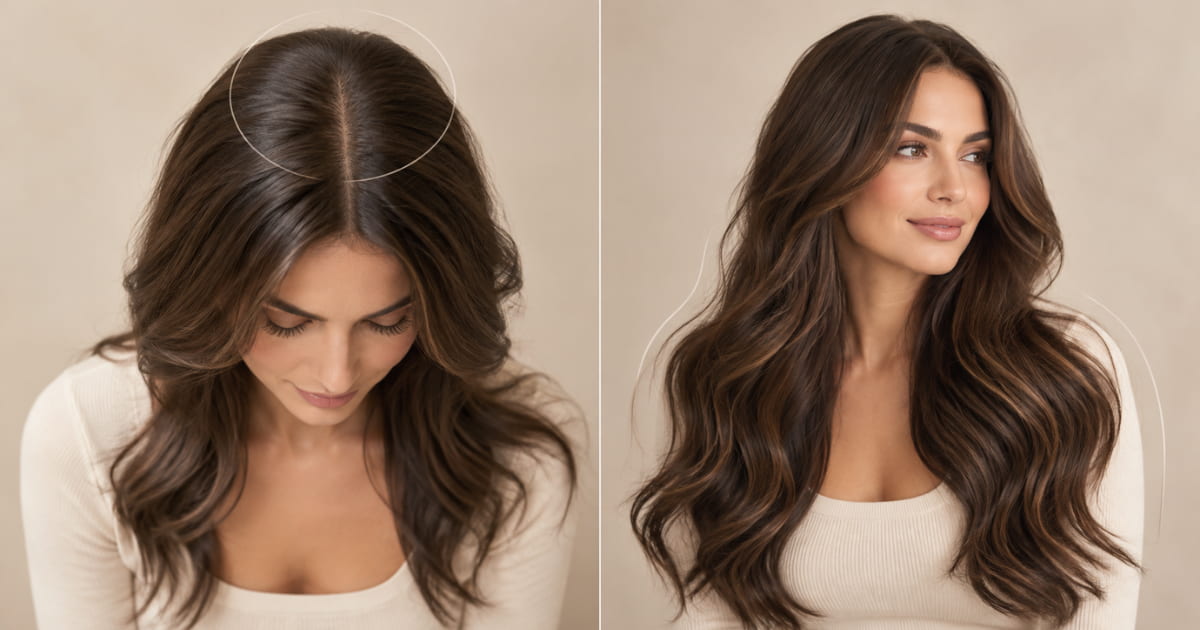
Hair extensions are usually the more direct option for adding length or fullness through the sides, mid-lengths, and ends. Hair toppers are designed to add coverage and fullness over a selected area at the top of the head, such as the part or crown. The right starting point is the area you want to change.
“I want more volume” can mean several things. You might want a fuller ponytail, denser-looking ends, more height at the crown, or less visible scalp along your part. Those goals do not necessarily call for the same solution.
At Bloom Studio Hair Extensions in Houston, we specialize in Ice Fusion Hair Extensions. Before discussing the amount of added hair, we want to understand what you want it to change. Fuller ends and better coverage at the top are different goals, and the consultation should reflect that.
What Is the Difference Between Hair Toppers and Extensions?
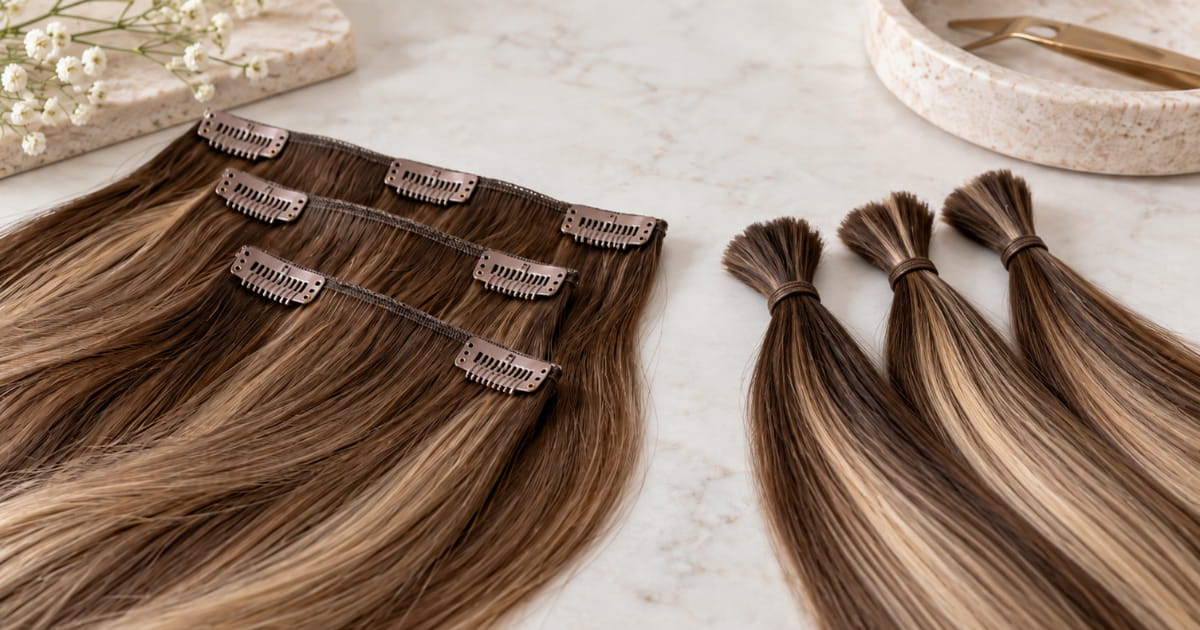
A hair topper is a partial hairpiece with a base that sits over a selected upper-head area and blends with your own hair. Extensions add strands or sections of hair through the existing hair to create length, fullness, or both. Their placement is a central difference, even when both make a hairstyle look fuller.
Neither category describes one universal product or wearing routine. Many toppers use clips, while some designs use other attachment systems. Extensions include removable options and professionally installed methods worn between appointments.
For toppers, the base is as important as the hair attached to it. It needs to cover the intended area and provide suitable attachment locations; choosing by hair color and length alone is not enough. Manufacturer Jon Renau explains these fitting considerations in its topper base fitting guide.
Which Option Matches the Area You Want to Improve?
Choose by the result you want to see, rather than the word “volume” alone. Point to the area that bothers you: the ends, the sides, the crown, or the part. Then describe the change longer, fuller, higher, or better covered. The following scenarios can help you explain your goal.
If You Want Length or Fuller Ends
Extensions may be a good option when your top coverage already meets your expectations and the main change is below it. You can want fuller-looking ends without wanting longer hair; the added hair can be selected and blended around your current length.
For example, someone who likes a shoulder-length haircut may want a denser perimeter rather than a longer style. That is a different goal from someone who likes their lengths but wants more coverage over the crown.
Read our guide to hair extensions for volume without added length for a closer look at a fullness-focused installation.
If You Want Part or Crown Coverage
A topper may be the more relevant option when your main concern is visible scalp along the part or at the crown. Its base sits over the area that needs coverage, with attached hair blending into your own lengths.
The right design still matters. A piece intended for a narrow part may not cover the same area as a broader crown topper. A conventional crown piece should not automatically be assumed to address every frontal or hairline concern.
A specialist who fits toppers can assess the coverage you want, the appropriate base, attachment options, and how the piece will integrate with your haircut.
Is Crown Volume the Same as Crown Coverage?
No. Crown volume describes height or fullness at the top of a hairstyle. Crown coverage describes how much the hair conceals the scalp in that area. A fuller style through the lengths can change the overall silhouette while leaving the visibility of the part or crown largely unchanged.
This distinction matters because adding more extension hair is not automatically the answer to every concern about “thin-looking hair.” Extensions may make a ponytail or the ends look fuller without placing coverage over a sparse part.
It is also possible to want more lift at the crown without needing additional scalp coverage. Before choosing either product, explain what bothers you about the current look: lack of height, lack of density, visible scalp, or a combination.
For example, if you like the fullness of your hair when it is gathered in a ponytail but dislike the visible scalp along your part, adding density to the ponytail addresses the wrong area. If your part already looks the way you want and only the bottom of the ponytail looks sparse, the priority is different.
Ask yourself: “If my lengths were fuller tomorrow, would I still be concerned about the top?” Your answer helps keep the plan focused on the result you actually want.
Are Toppers or Extensions Better for Fine or Thinning Hair?
The label “fine” or “thin” does not decide the answer. Fine refers to the diameter of individual strands; low density describes how much hair is present in an area. A person with fine strands and adequate top coverage may want fuller lengths, while someone with a sparse crown may primarily want coverage.
For extensions, two practical questions matter: can the natural hair support the proposed amount of added hair, and can it help conceal the attachments? The answers should guide the installation rather than a general hair-type label.
Our guide to hair extensions for fine or thin hair explores extension suitability in more detail.
A topper also needs an appropriate fitting plan. For a clip-in design, the hair supporting the clips matters as well as the area being covered. Coverage does not make every attachment location suitable.
If your hair is actively or unexpectedly shedding, do not treat either product as an automatic next step. Read our guide to hair extensions and hair loss; unexplained changes should be discussed with a qualified healthcare professional. Cosmetic fitting cannot diagnose the cause.
Can You Use a Hair Topper and Extensions Together?
Sometimes a topper and extensions can address different parts of the same goal: coverage above and fuller or longer hair below. First, assess what a properly fitted topper contributes on its own. Its lengths may already provide enough fullness, making a second system unnecessary.
If both are being considered, the professionals involved should review:
- Where the topper base and attachments will sit relative to the extensions.
- Whether natural hair can support the proposed combination.
- How color, texture, length, and density will blend from top to bottom.
- Whether the usual parting and hairstyles work with both systems.
- How each product will be cleaned, removed, and maintained.
Compatibility should be checked before either installation is finalized. If you already wear a topper, let your extension specialist know and ask whether to bring it to the appointment. If you already wear extensions, tell the topper fitter about their placement and maintenance requirements.
What Should You Check Beyond the Finished Look?
Compare the wearing routine as well as the finished look. A removable topper or extension set creates a different daily routine from a system worn between professional appointments. Neither category has one standard care schedule, so ask about the exact product and attachment you are considering.
Before committing, ask:
- Can I remove it myself, or does removal require a professional?
- What does washing, drying, and styling involve?
- Can I wear my usual part, ponytail, or pulled-back hairstyle?
- What maintenance appointments and ongoing costs should I plan for?
For a topper, check the appearance of the base and its edges as well as the hair color and lengths. For extensions, check the transition from your natural haircut to the added hair and the concealment of attachments in your usual styles. Neither option comes with a universal guarantee of invisibility.
The total cost should also be discussed for the actual plan, including fitting or installation and ongoing care. A broad “toppers are cheaper” or “extensions cost more” comparison is not useful without knowing the product, amount of hair, and service requirements.
How Can Bloom Studio Hair Extensions Help You Decide?
Bloom Studio Hair Extensions can help you decide whether an Ice Fusion plan suits your length and fullness goals. The consultation looks at your natural hair, desired result, and wearing routine before an installation is recommended. If coverage at the part or crown is your main priority, seek a fitting with a specialist who works with toppers.
Ice Fusion Hair Extensions are installed using a special cold gel or adhesive, without heat. The strand-by-strand approach allows the extension plan to be customized, but it does not turn extensions into a topper or guarantee coverage at a sparse part or crown.
For your consultation near the Galleria and Uptown Houston, bring photos of your hair from the front, sides, and back, along with an image of the result you like. If the concern is at the top, include a view of your usual part or crown. Explain what you want to change and what you already like about your hair.
If length or fullness through the existing hair is your priority, schedule a hair extension consultation with Bloom Studio Hair Extensions. We can discuss whether an Ice Fusion plan fits your hair and the result you want.
Frequently Asked Questions
Can Hair Extensions Cover a Wider Part?
Hair extensions are generally used to add length and fullness through existing hair, rather than place a coverage base over the part. Fuller lengths may change the overall look, but they do not guarantee less visible scalp along a wider part. A topper assessment may be more relevant when part coverage is the main goal.
Do I Need a Hair Topper If I Only Want Fuller Ends?
Not necessarily. If your top coverage meets your expectations and the main concern is sparse-looking ends, a volume-focused extension plan may be the more direct option. Suitability depends on the condition and support of your natural hair and the amount of fullness you want.
Can a Hair Topper Add Length Too?
Yes, a topper with longer hair can contribute length, depending on its design and how it blends with your haircut. That does not mean it will create the same length and density throughout the sides and back as an extension plan. Assess the entire silhouette before deciding whether another product is needed.
Should I Buy a Topper Before My Extension Consultation?
If you are considering wearing both, speak with the professionals involved before purchasing. The topper's base, attachment locations, hair length, and density can affect the extension plan. If you already own a topper, tell your extension specialist and ask whether to bring it to the consultation.