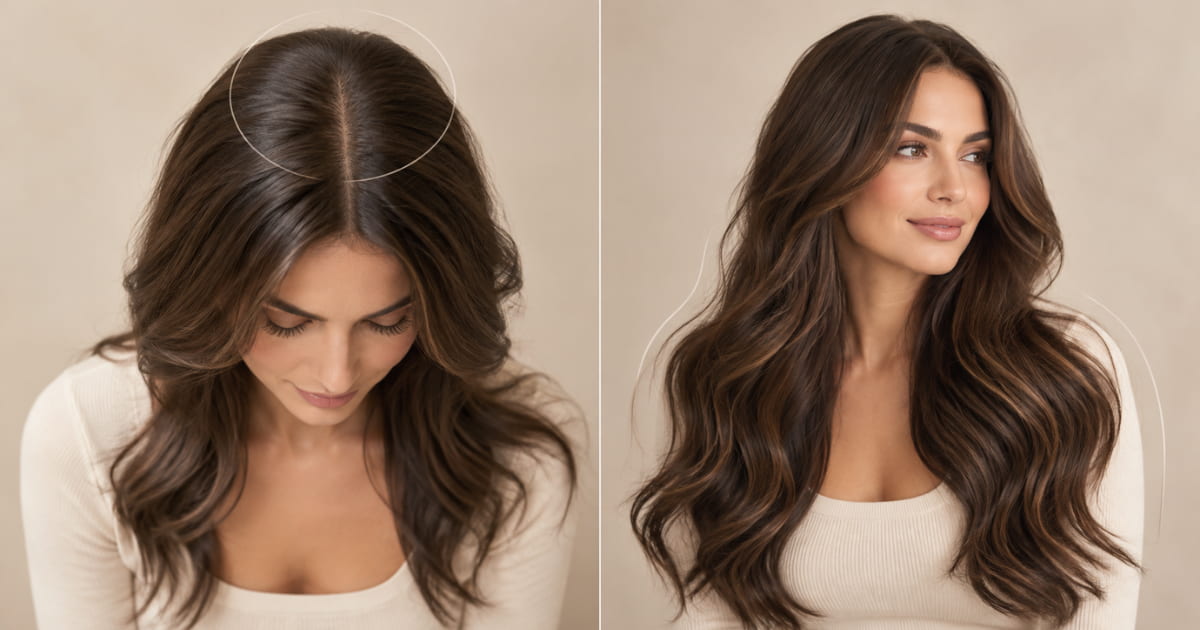
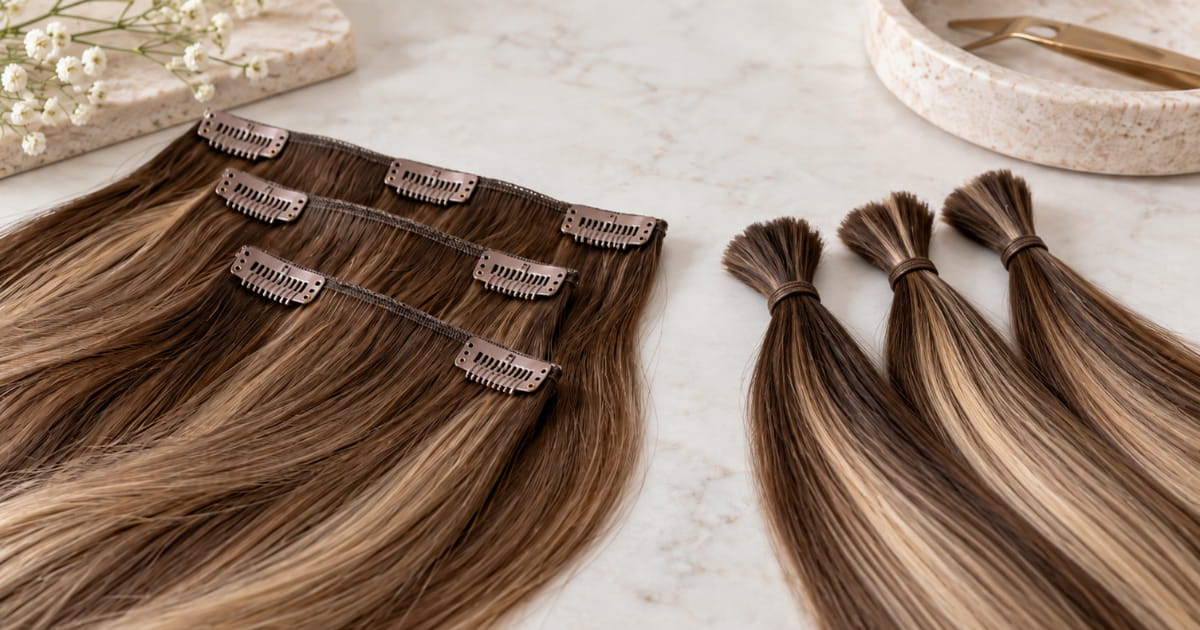
Ice Fusion vs NBR and IBE Extensions: Individual Bonds vs Beaded Rows
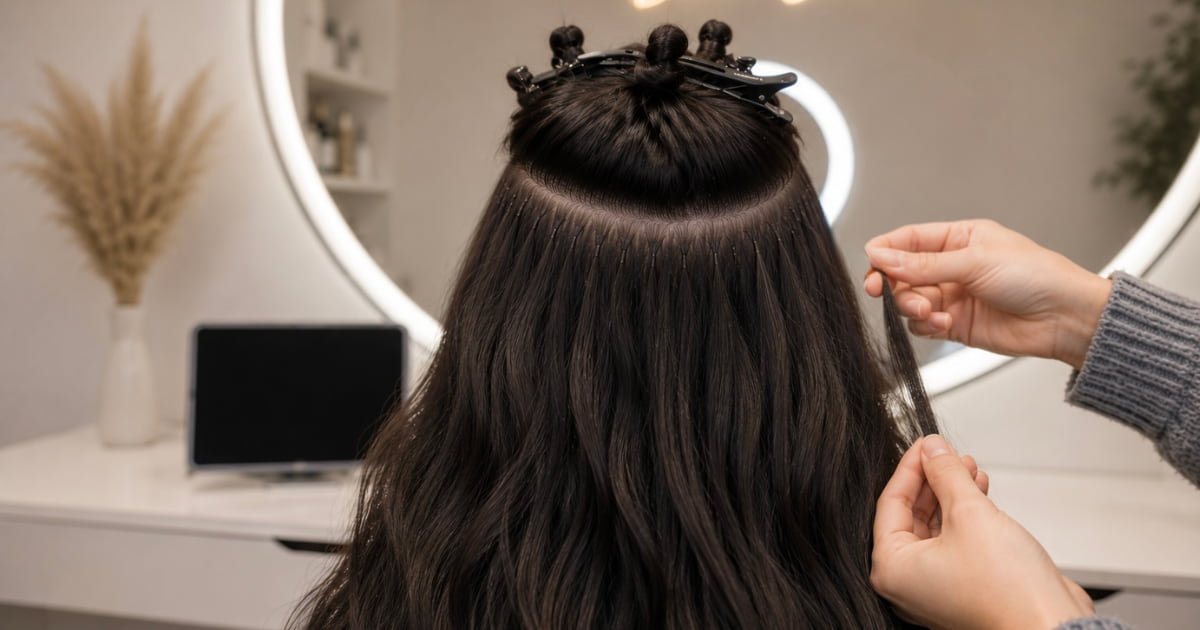
Ice Fusion, NBR, and IBE can all add length or volume, but they organize and attach extension hair in different ways. Ice Fusion uses many small strand-by-strand bonds, while NBR and IBE use weft hair supported across horizontal beaded rows.
That structural difference affects placement, movement, weight distribution, coverage, styling, and maintenance. No method is automatically better for every client. The appropriate choice depends on what the natural hair can support and conceal, the desired result, everyday hairstyles, and the maintenance schedule the client can follow.
For clients comparing Ice Fusion vs NBR extensions or Ice Fusion vs IBE, the decision is not between different names for the same attachment. It is a comparison between an individual-bond structure and row-based wefts.
For a broader overview of K-tips, tape-ins, micro rings, sew-ins, IBE, and Ice Fusion, see our complete hair extension methods comparison. This guide focuses only on the commercial decision between Ice Fusion individual bonds and NBR or IBE beaded rows.
What Is the Main Difference Between Ice Fusion, NBR, and IBE?
Ice Fusion attaches extension hair in many small individual sections. NBR and IBE are separate branded row-based systems that use weft hair. Individual bonds may allow more targeted placement and independent movement, while rows can add broad density efficiently. Both structures require professional installation, suitable weight, natural-hair coverage, and scheduled maintenance.
Ice Fusion Hair Extensions are applied strand by strand using a special cold gel or adhesive, without heat. Bond size, color, weight, and position can be adjusted throughout the installation rather than being limited to one continuous row.
Natural Beaded Rows® (NBR®) and Invisible Bead Extensions® (IBE®) are separate branded row-based systems. With IBE, wefts are sewn onto a concealed continuous beaded track. NBR and IBE belong to the same broader row-based category and should not be treated as interchangeable names. Their exact installation protocols and training requirements differ by system.
Ice Fusion vs NBR and IBE at a Glance
The table describes the general structure of each method. Exact NBR and IBE techniques, maintenance timing, hair type, and service inclusions should be confirmed with a professional trained in the specific system.
How Does Weight Distribution Differ?
Ice Fusion distributes extension hair across many small attachment points, while NBR and IBE distribute weft weight along horizontal foundations. Neither pattern is automatically gentler: the planned weight must match the strength, density, and coverage of the natural hair.
With Ice Fusion, each bond is supported by its own section of natural hair. The section and bond should be appropriately sized so the added strand is not too heavy for the hair supporting it. The total installation can also be adjusted by changing the number, size, and location of the bonds.
With a beaded-row method, several pieces of weft hair may be supported across a row. Depending on the system, row position, beadwork, stitching, the number of wefts, and total row weight can affect how the installation feels and grows out. Broad distribution does not remove the need for careful tension and weight planning.
Which Method Allows More Targeted Placement?
Ice Fusion generally offers more small-area placement control because individual strands do not have to follow a continuous row. Beaded rows can build substantial density efficiently, but their placement remains connected to the position and shape of each row.
Targeted placement may be useful when the goal is to strengthen thin-looking sides, add fullness through selected areas, continue several color tones, or plan around a part line. At Bloom Studio Hair Extensions, the Ice Fusion Hair Extension installation in Houston is customized around natural density, haircut, color, texture, desired result, and usual hairstyles.
Rows may be efficient when a client wants broader fullness through the back and lengths. However, the natural hair must be able to cover the row, weft edge, and attachment area as the hair moves and grows.
How Do Individual Bonds and Beaded Rows Move?
Individual Ice Fusion strands move in smaller sections, while NBR and IBE hair moves with the connected weft and row. This can change how the extensions respond when the hair is parted, lifted, braided, or gathered into a ponytail.
Small independent bonds may give a stylist more freedom to leave space around visible hairlines and position strands according to the client’s common hairstyles. A well-planned beaded row can also remain discreet, but it needs sufficient natural coverage above and around the row.
No method can promise invisible attachments in every hairstyle. Visibility depends on natural density, attachment placement, ponytail or updo direction, lighting, grow-out, and how much tension is used while styling.
Which Structure Is Better for Adding Volume?
Beaded rows can add broad density efficiently, while Ice Fusion can add volume in more targeted sections. The better structure depends on whether the client needs overall fullness, stronger-looking ends, additional side density, length, or a combination of goals.
A row-based plan may place a larger amount of hair across one or more horizontal foundations. This can work well when the natural hair has enough strength and coverage for the planned rows.
Ice Fusion does not require volume to be added in one continuous band. Individual strands can be distributed through selected areas, and the installation does not have to create dramatic length. For some clients, a conservative number of carefully placed bonds may create a more balanced result than adding the greatest possible amount of extension hair.
What Natural-Hair Coverage Does Each Method Need?
Every professional extension method needs enough natural hair for support and concealment. Beaded rows usually require coverage across the full row area, while individual bonds can be varied in size and positioned around smaller areas. That does not mean individual bonds are suitable for every density or hair condition.
A useful assessment should consider:
- strand thickness and strength;
- overall density and current condition;
- coverage near the crown, sides, and hairline;
- current haircut and natural length;
- requested extension length and volume;
- preferred part lines, ponytails, and updos;
- the total added weight;
- willingness to follow professional maintenance.
Fine hair and low-density hair are not identical. Fine strands may still have good overall density, while thicker strands can be sparse in certain areas. Method selection should be based on the actual support and coverage available rather than a general hair-type label.
How Does Maintenance Differ?
Ice Fusion maintenance normally involves professional removal followed by an assessment and strand-by-strand reinstall. NBR and IBE require their own system-specific row maintenance. The appointment type, timing, and cost structure therefore differ even when high-quality extension hair can be reused.
Many Bloom Studio Hair Extensions clients return for an Ice Fusion reinstall after approximately 3–4 months. Exact timing depends on natural hair growth, density, bond condition, lifestyle, product use, and home care. During the appointment, the existing bonds are professionally removed and the natural and extension hair are evaluated before reapplication.
IBE currently recommends an initial follow-up around seven weeks, with many row reinstalls occurring around 8–10 weeks. Exact timing should still be confirmed with the certified provider.
Other row-based systems may use different maintenance intervals and appointment protocols. Confirm the exact schedule with the provider trained in the system being considered rather than applying the IBE timeline to every beaded-row method.
When comparing long-term cost, ask about more than the initial installation. Consider professional removal, row maintenance or reinstall, appointment frequency, whether the extension hair can be reused, when replacement hair may be needed, and what is included in each service.
Does Houston Heat or Humidity Favor One Method?
Houston heat and humidity do not make Ice Fusion, NBR, or IBE universally better. Climate affects aftercare more than it determines suitability. Sweat, frequent washing, swimming, and damp roots make full drying and consistent attachment care especially important for both individual bonds and beaded rows.
Clients should follow the care instructions for the installed method, keep unsuitable oils or heavy products away from attachment areas, avoid sleeping with damp roots, and schedule maintenance on time. The method should still be selected according to the natural hair and lifestyle-not from a claim that one attachment is automatically “humidity-proof.”
Who May Prefer Ice Fusion Instead of a Beaded Row?
Ice Fusion may be worth considering when a client wants detailed strand-by-strand placement, independent movement, targeted volume, or an installation planned around changing part lines and hairstyles. It may also suit someone who prefers a professional removal-and-reinstall maintenance model rather than system-specific row maintenance.
Suitability still has to be confirmed. Ice Fusion uses a cold gel or adhesive, requires detailed application and removal, and should not be chosen solely because the bonds appear small in a photograph.
Who May Consider NBR or IBE?
A client may consider a professionally installed beaded-row method when the goal is broad density or length and the natural hair has enough strength, length, and coverage for the proposed rows. The client should also be comfortable with system-specific row maintenance and should choose a professional with training in the exact branded system being offered.
NBR and IBE should not be treated as generic labels for every hand-tied or hidden-bead installation. Ask the provider which system they use, what method-specific training they have completed, how weight and placement are planned, and how removal and maintenance are handled.
What Should You Ask Before Choosing a Method?
The best comparison is based on the complete installation and maintenance plan-not only the attachment name. Ask:
- How will the extension weight be matched to my natural density and strand strength?
- Can my hair support and conceal the proposed bonds or rows?
- How will placement work with my normal part, ponytails, and updos?
- Is the goal targeted volume, broad density, length, or a combination?
- What happens during removal, reinstall, or move-up appointments?
- How often should I expect professional maintenance for my own growth pattern?
- Can the extension hair be reused, and how will its condition be assessed?
- What home-care restrictions apply near the bonds, beads, or rows?
- What costs should I expect across several maintenance cycles?
- Is the installer trained in the exact method being recommended?
Clear answers should connect the method to your starting hair, desired result, routine, and budget. A provider should also explain the limitations of the proposed plan rather than promising that one method is automatically invisible, comfortable, or suitable for everyone.
Choosing Between Ice Fusion and Beaded Rows in Houston
The central difference is structural: Ice Fusion creates many small individual attachment points, while NBR and IBE support weft hair across beaded rows. That difference affects where hair can be placed, how it moves, how much coverage is needed, and what kind of maintenance appointment follows.
For Houston clients comparing Ice Fusion with NBR extensions or Invisible Bead Extensions, the most useful question is not which method is most popular. It is which attachment structure fits the starting hair, desired result, styling habits, and maintenance plan.
Bloom Studio Hair Extensions specializes in Ice Fusion Hair Extensions near the Galleria and Uptown Houston area. If you are comparing a current beaded-row installation with a strand-by-strand option, we can assess your natural hair and explain what an individualized Ice Fusion plan would require.
Schedule a Hair Extension Consultation in Houston to discuss density, color, length, volume, styling habits, maintenance, and whether Ice Fusion may fit your goals.
Frequently Asked Questions
Are NBR and IBE the same hair extension method?
No. NBR and IBE are separate branded row-based systems and should not be treated as interchangeable names. Their exact installation protocols and training requirements differ by system. With IBE, wefts are sewn onto a concealed continuous beaded track.
Is Ice Fusion a beaded-row extension method?
No. Ice Fusion is a strand-by-strand method that uses many small individual bonds rather than weft hair attached across rows. Bloom Studio Hair Extensions applies Ice Fusion using a special cold gel or adhesive, without heat.
Does Ice Fusion use the same maintenance schedule as NBR or IBE?
No. Ice Fusion bonds are professionally removed and the extension hair is assessed before a strand-by-strand reinstall. NBR and IBE follow system-specific row-maintenance protocols. IBE currently recommends a first follow-up around seven weeks, with rows reinstalled around 8–10 weeks on average; exact timing should be confirmed with the certified provider.
Are individual bonds or beaded rows better for fine hair?
Neither structure is automatically better for every person with fine hair. Individual bonds may allow smaller, more targeted placement, while rows can distribute hair across a wider foundation. Suitability depends on strand strength, overall density, coverage, planned weight, maintenance, and professional removal.
Can Ice Fusion add volume without a full beaded row?
Yes. Ice Fusion strands can be placed in selected areas to add side density, strengthen thin-looking ends, or create overall fullness without using a continuous row. The amount and placement still need to match what the natural hair can support.