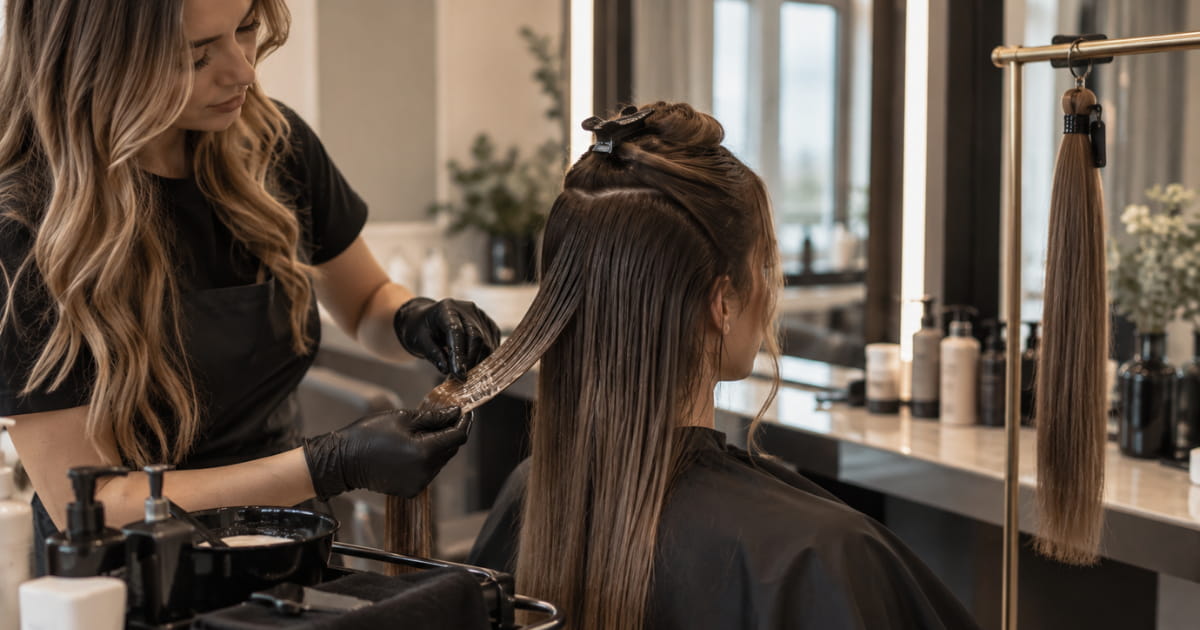
Why Do Hair Extensions Tangle? Causes, Prevention, and When to Book Maintenance

One of the most common questions we hear is, “Why are my hair extensions tangling even though I brush them every day?”
Hair extensions should feel smooth, flexible, and easy to style. While a few knots at the ends can happen after wind, sleep, exercise, or a busy day, repeated tangling-especially close to the scalp-usually means something has changed.
At Bloom Studio Hair Extensions in Houston, we don’t assume every tangle has the same cause. We look at where the tangling begins, how the bonds have grown out, how your natural hair is behaving, and whether your daily routine or maintenance schedule needs to be adjusted.
Hair rarely starts tangling without a reason. In our experience, there is almost always an underlying cause that can be identified before small knots develop into dense matting.
Most tangling can be prevented when extensions are installed correctly, cared for consistently, and professionally maintained on schedule.
Why Are My Extensions Tangling Near the Roots?
Hair extensions usually tangle near the roots because naturally shed hairs remain held inside the attachment area as the natural hair grows.
Those loose strands can wrap around neighboring hairs and extension bonds. If the roots are not brushed and separated carefully-or maintenance is delayed-small knots can gradually develop into compact matting.
Root tangling may also develop after:
- Sleeping with damp hair.
- Applying conditioner or oil near the bonds.
- Allowing dry shampoo or styling residue to accumulate.
- Wearing hairstyles that repeatedly create friction.
- Brushing only the visible lengths and ends.
- Waiting too long between reinstall appointments.
A few trapped shed hairs are normal. A dense or tight mat close to the scalp should be assessed by an extension specialist rather than aggressively pulled apart at home.
Tangling vs. Matting
Tangling and matting are not the same problem.
Tangling can often be managed with careful brushing from the ends upward. Matting is more compact and should not be forcefully brushed, cut, or pulled apart at home.
The Most Common Reasons Hair Extensions Tangle
1. Natural Shedding Is Trapped Near the Bonds
Natural hair sheds every day. Without extensions, many loose strands fall away during washing and brushing. With strand-by-strand extensions, some shed hairs remain held inside the attachment until professional removal.
As the natural hair grows, the attachment moves farther from the scalp. Trapped strands then have more space to twist around neighboring sections.
Normal shedding does not automatically mean hair loss. However, if shedding appears excessive, the scalp feels sore, or the natural hair density is changing, read our guide on getting hair extensions when your hair is falling out before continuing extension wear.
2. Maintenance Is Overdue
Even a well-installed set of extensions cannot remain in the same position indefinitely. Natural hair growth creates more movement between the scalp and the attachments, allowing neighboring sections to cross and twist.
At Bloom Studio Hair Extensions, Ice Fusion Hair Extensions are applied strand by strand using a specialized cold fusion adhesive/gel without heat. As the natural hair grows, the small attachments gradually move farther from the scalp and eventually need to be professionally removed and reapplied.
Many clients need a reinstall around 10–14 weeks, but the correct timing depends on natural hair growth, density, lifestyle, product use, and home care.
We’ve found that clients who stay on schedule usually experience far less tangling than those who wait until the attachments have grown significantly away from the scalp.
Our guide explaining how often hair extensions need to be moved up or reinstalled covers the main factors that affect an individual maintenance schedule.
Waiting until the bonds are very grown out, visible, uncomfortable, or heavily tangled can make routine maintenance more complicated.
3. Brushing Stops Below the Attachment Area
Brushing only the visible length may keep the ends smooth while knots quietly form underneath the top layer and between the attachments.
Support the root area with one hand and use an extension-safe brush from the ends upward. Then gently brush the upper lengths without catching or pulling on the bonds.
Use your fingers to check that individual extension sections remain separated from one another. Pay particular attention to the nape, behind the ears, and underneath the top layers.
Taking a few extra seconds to separate the bonds each day is one of the simplest ways to prevent small tangles from becoming larger mats.
For a complete washing, brushing, styling, and sleeping routine, follow our Ice Fusion Hair Extensions Care Guide.
4. The Roots Stay Damp
Wet hair is more vulnerable to stretching, friction, and knotting. The risk increases when the roots remain damp after washing, swimming, exercise, or sweating.
Houston’s heat and humidity can slow drying around the attachment area more than many clients expect. Hair may feel completely dry on the surface while moisture remains trapped between the bonds.
Going to bed with damp roots can compress shed hairs and neighboring sections together overnight. This is one reason proper nighttime care is so important.
After washing:
- Blot the hair instead of rubbing it.
- Separate the extension sections with your fingers.
- Dry the roots and attachment area completely.
- Pay attention to the nape and behind the ears.
- Avoid tying wet extensions into a bun, braid, or ponytail.
For a complete bedtime routine, review our guide on how to sleep with hair extensions.
5. Product Builds Up Near the Roots
Product residue is one possible cause of root tangling. Dry shampoo, hairspray, scalp oil, sweat, and rich conditioning products can collect around the attachments and make individual sections harder to separate. If the roots feel sticky or coated, avoid adding more oil, follow the cleansing routine recommended for your installation, and book maintenance if buildup remains.
If the hair also feels rough, dull, or harder to detangle after washing, our guide to hard water and hair extensions explains how mineral buildup can differ from product residue.
For product-selection and placement guidance, read how to choose and place products around Ice Fusion bonds.
6. Nighttime Friction Creates Knots
Sleeping with extensions completely loose allows the hair to move across the pillow, neck, shoulders, and bedding for several hours.
Tangling often develops at the nape and behind the ears because these areas experience repeated friction.
Before bed:
- Brush and separate the extensions.
- Make sure the roots are completely dry.
- Secure the lengths in a loose, low braid.
- Consider using a silk or satin pillowcase.
- Avoid tight buns or high ponytails that pull on the roots overnight.
A silk or satin pillowcase may help reduce friction, but it does not replace proper brushing, separation, and drying.
7. Houston Heat, Sweat, and Humidity Affect the Roots
Hair extensions can be worn successfully in Houston, but heat and humidity make consistent aftercare more important.
Living in Houston doesn’t mean you’ll struggle with extensions-it simply means consistent drying and maintenance become even more important.
Sweat and moisture can remain around the roots after workouts, outdoor activities, swimming, or time spent in humid weather. When combined with product residue and friction, this can make the extension sections harder to keep separated.
After sweating heavily:
- Allow the root area to dry completely.
- Gently separate the bonds with your fingers.
- Brush the lengths once the hair is dry.
- Wash the scalp when needed to prevent residue from accumulating.
Our guide to the best invisible hair extensions for Houston’s climate explains how method selection and home care can affect comfort and manageability in humid conditions.
8. The Installation or Extension Hair Is Not a Good Match
Persistent tangling from the beginning of a new installation should be professionally assessed.
Possible causes may include:
- Overprocessed extension hair.
- Incompatible natural and extension hair textures.
- Too much extension weight for the natural hair.
- Incorrect bond size.
- Poor placement.
- Insufficient blending.
- Unsuitable aftercare products.
- Damage caused by excessive heat styling.
During a hair extension consultation, Bloom Studio Hair Extensions evaluates the natural hair, scalp, density, texture, color, lifestyle, styling habits, and maintenance expectations before recommending an extension plan.
New extensions should not require constant aggressive detangling. When tangling begins immediately and continues despite correct care, the installation and extension hair should be checked rather than simply adding more products.
Why Do Hair Extensions Tangle at the Ends?
Tangling at the ends is usually caused by dryness, friction, heat styling, or missed detangling rather than root maintenance.
Extension hair is not naturally nourished by the scalp’s oils in the same way as hair growing directly from the scalp. The lengths therefore need consistent but lightweight conditioning.
Long hair also rubs against clothing, bedding, jackets, scarves, and shoulders. Dry or damaged ends catch neighboring strands more easily.
To reduce tangling at the ends:
- Brush before washing and sleeping.
- Condition the mid-lengths and ends.
- Use heat protection before styling.
- Keep hot tools away from the attachment area.
- Braid the hair during sleep or windy activities.
- Trim dry or damaged ends when needed.
- Avoid using excessive amounts of styling products.
How to Prevent Hair Extensions From Tangling
Most extension tangling can be reduced through consistent daily care, complete root drying, careful product placement, and professional maintenance at the appropriate time.
A prevention routine does not need to be complicated.
Brush and Separate Daily
Detangle from the ends upward while supporting the roots. Do not drag the brush directly through the attachments.
Use your fingers to make sure individual extension sections have not started joining together. Catching a small knot early is easier than correcting a dense cluster later.
Wash Without Creating Friction
Keep your head upright while washing. Massage shampoo gently into the scalp and allow the lather to move through the lengths.
Do not pile the hair on top of the head, scrub in circular motions, or rub the extension bonds together.
Dry the Roots Completely
Separate the extension sections while drying so moisture does not remain trapped between the attachments.
Pay particular attention to:
- The nape.
- Behind the ears.
- Underneath the top layers.
- Areas that remain damp after workouts.
- Sections close to the scalp where airflow is limited.
Keep Rich Products Away From the Attachments
Apply conditioners, masks, oils, and rich leave-in products mainly through the mid-lengths and ends. Avoid adding more product to a sticky or densely tangled root area; product placement cannot replace professional maintenance when attachments have joined or grown too far from the scalp.
Protect the Hair Overnight
Brush, separate, fully dry, and loosely braid the extensions before going to sleep.
Avoid sleeping with the hair completely loose, damp, or secured in a tight style that creates tension around the attachment area.
Follow the Recommended Maintenance Schedule
Home care can reduce tangling, but it cannot stop natural hair growth.
As the attachments move farther from the scalp, the extensions eventually need professional removal and reapplication. Staying on schedule allows the shed hair inside the previous bonds to be released before neighboring sections become densely tangled.
What Should You Do if the Roots Are Already Matted?
Do not force a brush through a dense mat or pull the extension bonds apart.
You should also avoid:
- Cutting into the tangled area.
- Pulling individual bonds forcefully.
- Soaking the mat in oil.
- Applying heavy conditioner directly to the roots.
- Using a fine-tooth comb close to the scalp.
- Trying to remove the attachments yourself.
These approaches may tighten the knot, weaken the attachments, cut natural hair accidentally, or create unnecessary tension on the scalp.
Keep the area dry, avoid adding more product, and book an assessment promptly.
Advanced matting may require professional extension removal, cleansing, careful detangling, and an evaluation of the natural hair before extensions can be reapplied.
When Should You Book Hair Extension Maintenance?
Book maintenance when the attachments have grown away from the scalp, individual sections begin joining together, or tangling repeatedly returns despite correct home care.
Common signs include:
- Knots repeatedly forming close to the scalp.
- Individual extension sections beginning to merge.
- Bonds hanging lower or moving more than usual.
- Difficulty brushing between the attachments.
- Increased bond visibility.
- Pulling, soreness, or uneven tension.
- Multiple slipping bonds.
- Persistent buildup close to the roots.
- A visible change in how the extensions blend.
- Your recommended wear period approaching.
During an Ice Fusion Hair Extensions reinstall, the extensions are professionally removed, the natural hair and scalp are cleansed and assessed, the extension hair is prepared, and new bonds are applied in updated positions.
This process resets the placement after natural growth and removes the shed hair that remained inside the previous attachments.
Can Tangling Mean Something Is Wrong With My Natural Hair?
Sometimes tangling is primarily a maintenance or aftercare issue. In other cases, it may appear together with breakage, irritation, rapid shedding, scalp discomfort, or a visible change in hair density.
Extensions should not automatically be reinstalled when the scalp is inflamed or the natural hair cannot safely support the planned extension weight.
Our team evaluates the condition of the natural hair before recommending the next step. Depending on the assessment, this may include:
- A standard reinstall.
- A lighter extension plan.
- Smaller or fewer bonds.
- A temporary break from extensions.
- A cosmetic hair-care service such as Deep Hair Repair.
- Medical evaluation when symptoms fall outside salon care.
A consultation cannot diagnose a medical condition, but it can help determine whether continuing extension wear appears appropriate from a salon-care perspective.
Final Answer: Why Do Hair Extensions Tangle?
Hair extensions usually tangle when shed hairs, natural growth, moisture, friction, product buildup, and dryness allow strands or attachment sections to wrap around one another.
Tangling close to the roots most often develops when shed hair remains trapped around grown-out bonds and the individual extension sections are not consistently brushed, separated, dried, or maintained.
Small knots may respond to gentle daily care. Dense matting, soreness, or attachments that have moved far from the scalp should be professionally assessed.
If your extensions repeatedly tangle, feel uncomfortable, or have grown significantly away from the scalp, schedule a consultation with Bloom Studio Hair Extensions.
We’ll assess your extensions, natural hair, scalp, and current wear cycle to determine why the tangling is happening and recommend the safest, most effective solution for your hair.
Frequently Asked Questions
Why do hair extensions tangle most at the nape?
Hair extensions often tangle at the nape because this area experiences repeated friction from clothing, bedding, sweat, and natural head movement. The nape can also remain damp longer than more exposed sections. Daily brushing, complete root drying, and separating the attachment sections can help reduce knots.
Is a small amount of tangling near the bonds normal?
A few loose shed hairs or small knots may occur as the natural hair grows. However, dense clusters, joined attachment sections, soreness, pulling, or repeated matting are not concerns to ignore and should be assessed by an extension specialist.
Can I detangle a knot close to an extension bond at home?
A small, loose knot may be gently separated while supporting the roots. Stop if the knot feels tight or causes pulling. Do not cut, aggressively brush, or apply large amounts of oil to a dense mat close to an attachment.
Why are my new hair extensions tangling immediately?
New extensions that tangle persistently may have a texture or quality mismatch, incorrect weight distribution, unsuitable products, incomplete drying, or an installation issue. The extension hair and attachment placement should be professionally assessed if correct home care does not improve the problem.
What should I do if several extension bonds are stuck together?
Do not pull the bonds apart or force a brush between them. Keep the area dry, avoid applying oils or conditioner to the roots, and schedule professional maintenance. Joined attachments can become more compact and create additional tension when left unaddressed.