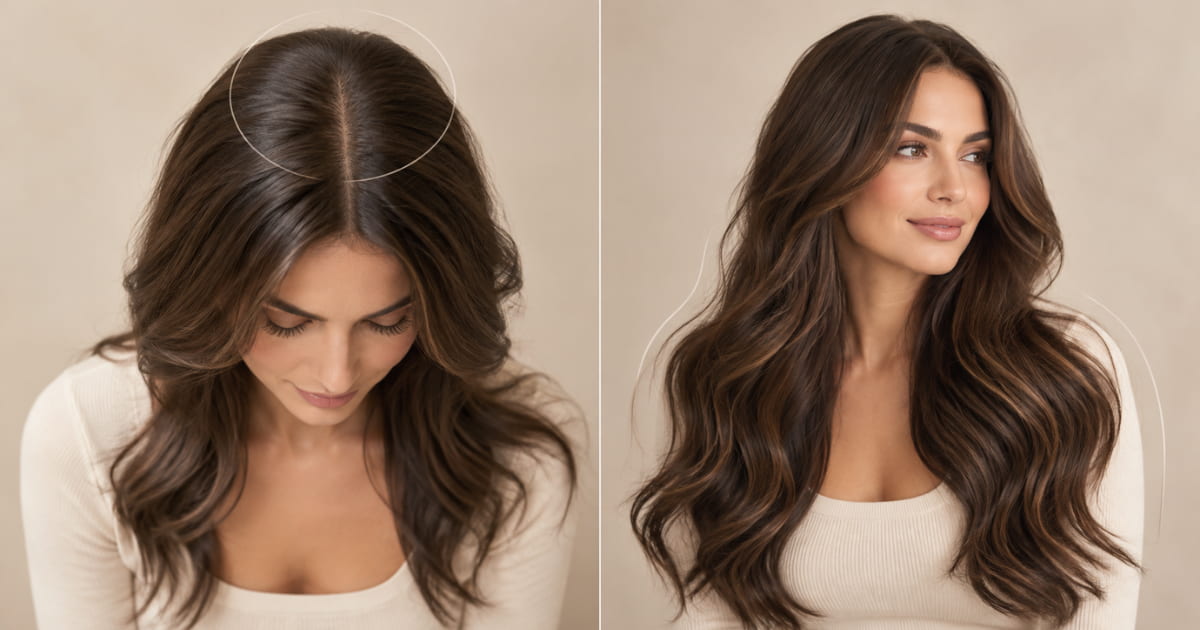
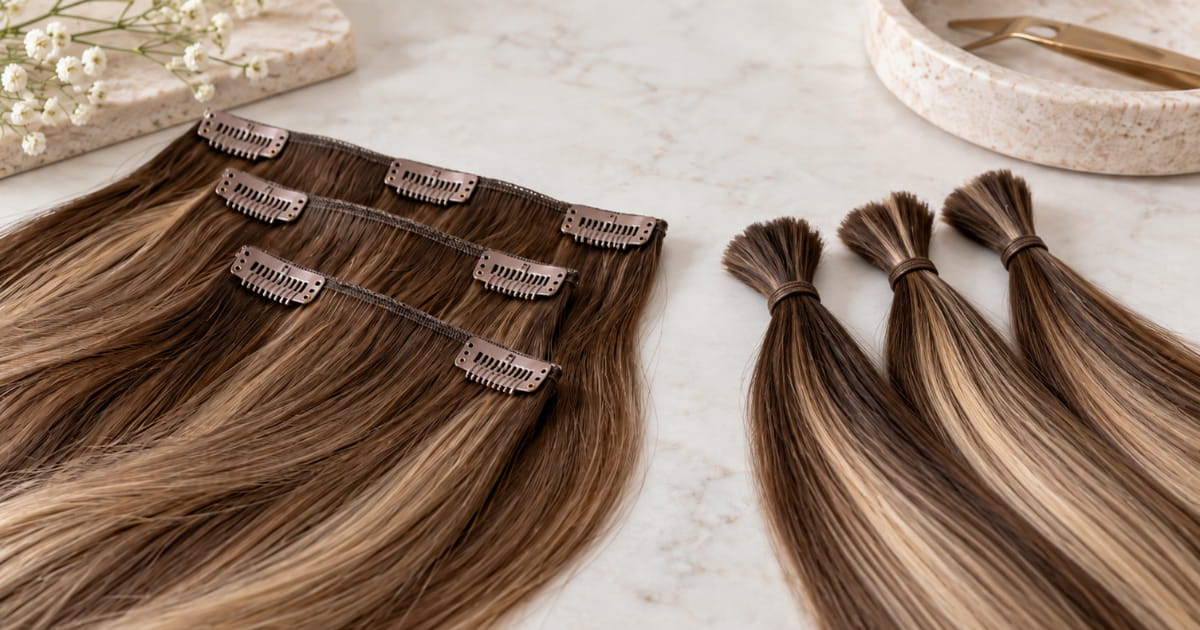
Hair Extensions for Wavy or Curly Hair in Houston: Texture Matching Guide
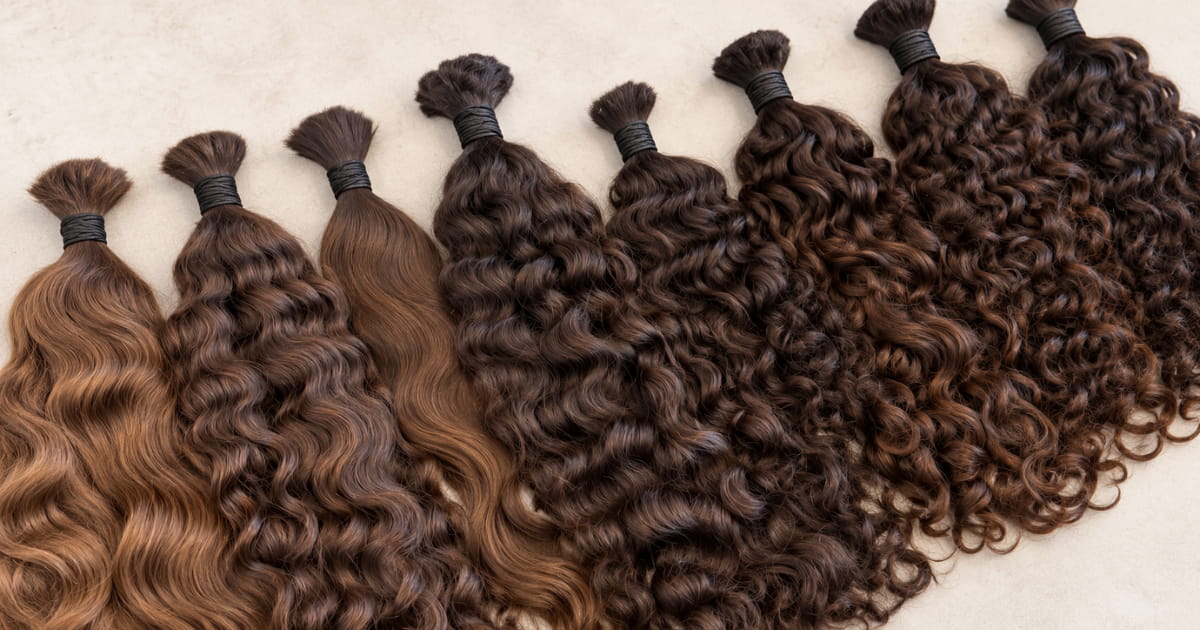
Hair extensions for wavy or curly hair should complement the texture you plan to wear every day. A suitable match considers the wave or curl pattern, strand thickness, finished length, and styling needed to bring your own hair and the added lengths together.
If you are researching curly hair extensions in Houston, start with your normal routine: natural curls, a smooth blowout, or a mix of both. A result that works for one routine may take more effort with another.
At Bloom Studio Hair Extensions, texture is considered alongside color, density, length, and styling habits during consultation. Available hair and its suitability for your intended look are confirmed before installation is planned.
What Should You Compare When Matching Wavy or Curly Hair Extensions?
Texture matching means comparing the shape, feel, and movement of extension hair with your own. For waves and curls, the assessment includes pattern, strand thickness, fullness, and how the finished lengths fall. Labels such as “wavy” or “curly” are useful starting points, but they do not describe every characteristic of the hair.
Two sets of hair can be the same shade and still look separate. Loose bends may sit differently beside tighter curls, while dense extension lengths can create a heavier outline than the client's natural ends.
Curl pattern and density are separate considerations. Curly hair is not automatically dense, and loosely waved hair is not necessarily fine.
Color also needs its own assessment. Our hair extension color-matching guide covers shade and undertone, while our guide to natural-looking hair extensions explains the broader role of density, placement, and coverage.
What Do Hair Types 1A–4C Mean?
You may have seen hair described with combinations such as 2A, 2C, 3B, or 4C. These labels come from a commonly used hair-typing system that groups hair according to its visible wave, curl, or coil pattern.
At a broad level:
Within the chart, the letters are generally used to describe differences in how loose or tight the visible pattern is. For example, Type 2 ranges from softer waves to more defined waves, Type 3 includes a range of curls and spirals, and Type 4 describes tighter coils.
This system can be useful language during a consultation, but it should not be treated as an exact formula for selecting extension hair.
Someone who describes their hair as 3A, for example, may have a different strand thickness, density, amount of shrinkage, styling routine, or variation across the head than another person who also identifies with 3A. It is also common for more than one wave or curl pattern to appear on the same head.
That is why a label such as 2C or 3B is only a starting point. For texture matching hair extensions, the specialist still needs to look at the actual pattern, movement, fullness, strand characteristics, desired length, and the way you normally style your hair.
The goal is not simply to find extension hair with the same number and letter. The goal is to create a combination that can work cohesively with your real hair and the finish you plan to maintain.
Should Extensions Match Your Natural Texture or Your Usual Hairstyle?
The selection should reflect the finish you intend to maintain, with your natural texture taken into account. Wearing your own curls most days, regularly smoothing them, and alternating between both looks create different requirements. Define that preference before choosing extension hair so the plan reflects your actual routine.
If you usually wear natural waves or curls
Use your normal finished texture as the reference. Photos taken after your usual wash and styling routine are more informative than an inspiration image showing a curl pattern you rarely wear.
For example, if you want to keep loose waves with minimal hot-tool styling, the selection needs to account for those bends through the lengths. A smooth sample is not enough to judge that result.
If you usually wear a smooth blowout
A selection intended for a smooth finish should be evaluated against the effort needed to maintain it. Your natural waves or curls are still part of the plan, including what happens when you skip the blowout.
If your goal is to stop straightening, say so before the hair is chosen. That changes the finish the installation needs to support.
If you alternate between both
One selection may not give an equally close match in every style. Establish which finish matters most and what work the other would require. That is more useful than choosing from a photograph of only one look.
Why Does the Blend After Washing Matter?
The blend after washing helps show how well the hair works with your home routine. A salon finish reflects the styling used that day; it cannot establish how closely the two textures will match afterward. Before selection, review what is known about the specific extension hair after washing and drying.
Curling natural hair and extensions together can create a coordinated look even when their underlying patterns differ. A finished photo can therefore be a useful styling reference without proving a natural curl match.
When reviewing a sample or a before-and-after example, establish:
- Whether the texture shown was created with hot tools or reflects the hair's usual pattern.
- How the specific extension hair behaves after cleansing.
- What drying and styling were needed to achieve the finish.
- Whether the starting hair resembles your own.
For curly hair extension blending, this context is more useful than a polished photograph alone. If the textures look unexpectedly different once you begin wearing and washing the extensions at home, share photos and your routine with the specialist before trying to correct the difference through repeated heat styling or a chemical service.
Can Ice Fusion Be Considered for Wavy or Curly Hair?
Ice Fusion may be considered when suitable extension hair is available and the natural hair’s density and condition are appropriate for the proposed installation. Curl pattern is only one part of that assessment. Density, condition, attachment coverage, placement, and the care routine also influence whether the proposed plan is appropriate.
Ice Fusion is a cold fusion hair extension method installed with a special cold gel or adhesive, without heat.
The attachment method and the texture of the extension hair are separate choices. Cold application does not make a particular bundle match your waves or curls, and a close texture match does not establish that the planned weight or placement is suitable.
For clients considering Ice Fusion for curly hair, Bloom Studio Hair Extensions starts with an individual assessment. The suitability of currently available hair should be established before purchasing hair or committing to an installation date.
How Does Houston Humidity Affect Texture Planning?
Houston humidity can make differences between natural hair and extension hair more noticeable if they respond differently outdoors. Your consultation should account for the changes you already experience, such as waves becoming fuller or a smooth blowout losing its shape, and the finish you want to maintain.
For example, natural roots and shorter sections may become more textured while the added lengths remain smoother. That contrast is worth considering when choosing hair, particularly if you want to reduce daily smoothing.
Describe a typical day rather than an ideal salon finish: your commute, time outdoors, workouts, and how often you restyle. These details help set practical expectations without treating humidity as a reason to rule extensions in or out.
For seasonal care, see our guide to wearing hair extensions in Houston summer heat.
How Should You Prepare for a Texture-Matching Consultation?
Bring clear photos of your own hair, realistic references for your goal, and a description of your styling routine. Include any recent services that changed its texture or condition. Together, these details help the specialist assess the finish you want and the upkeep you can comfortably maintain.
Useful references include:
- Everyday texture: front, side, and back photos, especially if your pattern varies across your head.
- Alternate styles: a smooth finish if you often straighten, or natural waves if you sometimes skip styling.
- Curl or wave pattern: if you know a curl-type label such as 2C or 3A, you can mention it, but photos of your actual hair are more useful than the label alone.
- Products and techniques: how you normally dry, detangle, define, or smooth your hair.
- Recent services: smoothing, perming, lightening, or other changes relevant to the assessment.
- Desired length: where you want the ends to fall while wearing your preferred texture.
Follow the specialist's preparation instructions rather than assuming you should arrive with a blowout or a defined curl routine. Your existing products and techniques may also need adjustments around the attachments; review those practical details before installation.
Bloom Studio Hair Extensions is located near the Galleria and Uptown Houston. Schedule a hair extension consultation to review your natural texture, currently available options, and whether the proposed Ice Fusion plan is suitable for your hair and goals.
Frequently Asked Questions
Can straight extensions blend with naturally wavy hair?
They may blend in a deliberately styled look, depending on the natural wave and extension hair. That does not mean the textures will match when worn with less styling. If you want to keep your natural waves most days, discuss that goal before choosing straight extension hair.
Is my curl-type number enough to choose extension hair?
No. A curl-type label such as 2C, 3A, or 4B can help describe your pattern, but it does not capture strand thickness, density, condition, variation across your head, how much the hair changes between wet and dry states, or your styling routine. Photos and an individual assessment provide more useful information for selecting suitable hair.
Can I have more than one curl pattern?
Yes. Different areas of the same head can show different wave, curl, or coil patterns. For extension planning, the overall texture and the areas that need to blend with the added lengths are more important than assigning one label to every strand.
Does a curled before-and-after photo show a natural texture match?
Not necessarily. The result may have been created with hot tools. Ask how the hair was styled and whether the example represents the client's everyday texture. A finished photo alone cannot show how the two textures behave after washing.
Will curly extensions look as long as straight extensions of the same listed length?
Not necessarily. Waves and curls affect where the ends fall. Ask how the proposed hair is measured and discuss the finished length in the texture you intend to wear. A listed length alone does not show where the hair will sit on you.